I have found keeping track of my reading in 2024 and 2025 extremely useful and interesting. I know that nobody else is really interested – and that is ok – but it helps me to structure my reading and that is reason enough to continue this year.
Werbung wegen Markennennung. Considered advertising due to naming of brands.
Tutankhamun: The Eternal Splendor of the Boy Pharaoh, Text by T.G.H. James – Photography by Araldo De Luca
To start off the year, some non-fiction… some jaw-dropping non-fiction.
This book gives a brief history of Tutankhamun’s place in history, especially in relation with the religious, political and artistic upheaval brought out by his father Akhenaton. It then covers Howard Carter’s career from artist to archaeologist and his discovery of the tomb of Tutankhamun.
What really stands out in this volume though are the photos by Araldo De Luca and the accompanying texts, detailing composition, imagery, techniques used, etc. The photos are stunning and the objects photographed even more so. Objects like the Canopic Shrine, the Ceremonial Throne or even a pair of earrings with duck heads are amazing. And there are so many more. I had to read this a few pages at a time – in order to fully appreciate what I was seeing.
Some thoughts:
- The author is perhaps a little to biased in Carter’s favour. Although the main allegations against him only came to light after this book was published, there were plenty of contemporary rumours and suspicions that he was stealing from the tomb.
- The tomb was robbed twice in antiquity. What we have left is amazing… but that begs the question – what was taken? The robbers also damaged some of the objects they left behind. Very sad.
- Tutankhamun was a minor pharaoh. He was still basically a boy when he died. How magnificent must the tombs of the great pharaohs have been? All plundered by thieves in antiquity.
Rose/House, by Arkady Martine
Arkady Martine is the author of the fantastically good sci-fi novels ‘A Memory Called Empire’ and ‘A Desolation Called Peace’. ‘Rose House’ is a novella that is a creepy near-future sci-fi murder mystery with AI at its core. A good read, but it didn’t grab me as much as her longer sci-fi novels.
Jour gris et autres récits, par Colette
Ces quatre nouvelles ravissantes de Colette sont de petits bijoux parfaits, parfaitement construits et aux multiples facettes.
J’ai trouvé cela difficile à lire – tant de fleurs et d’autres termes botaniques !
Ok… this is easier for me in English. These wonderful little gems of short stories each deserve a long detailed analysis. Indeed, as far as I know, they are often covered in literature classes in French schools for the baccalauréat (final school qualifications) and are probably analysed to death on a daily basis.
Colette triggers all of your senses as a reader and makes every short story seem like a journey of discovery, in which we meet her in various forms along the way. Unfortunately for me, the triggering of many of those senses involves a vast array of different flowers and other descriptive language, which meant that I had to turn to a dictionary more often than I would have liked.
I will return to Colette in the future – probably first to read more of her short stories.
Twelve Months, by Jim Butcher
The 18th book in The Dresden Files series, takes place in the twelve months (hence the title) following the huge battle that took up pretty much the whole last novel in the series. To be honest, I didn’t enjoy the last novel that much – it was like the second half of a Marvel film – one huge epic battle that just didn’t work for me as a novel. This latest edition to the series is much more down-to-earth and human though, focussing more on character growth than huge magical beasties (but of course, with plenty of those too). This series is one of the most entertaining fantasy series out there – total worth reading.
The Oresteia, by Aeschylus. Translated by Robert Fagles
The Oresteia is the only remaining trilogy of tragedies that we have from ancient Greece and is a hugely important work in the history of world literature. But even if it didn’t have historical significance, it is a powerful and evocative piece of entertainment, and would still be significant.
It tells the story of the transition away from revenge and towards justice. The curse of the house of Atreus results in a seemingly endless cycles of murder, culminating in Orestes’s murder of his mother, Clytemnestra and the birth of courtroom justice. Powerful and poetic, this work is a turning point… away from the primal revenge and barbarity of The Iliad and The Odyssey.
Captain Future – Der Ewige Herrscher, Szenario: Sylvain Runberg, Zeichnungen: Alexis Tallone
Diese BD wurde mir geliehen von einem Bekannten. Ich gestehe, ich hätte sie mir nicht selber gekauft… Insgesamt würde ich sagen… nicht schlecht. Nette Geschichte, gute Zeichnungen… mir fehlt nur etwas… Meine Lieblingsserien wie z.B. Valerian und Laureline oder Le Cycle de Cyann oder Der Incal, usw… habe deutlich mehr…charm? Biss? Ich weiß es nicht.
Sibylline: Chroniques d’une escort girl, scénario et dessin par Sixtine Dano
Cette bande dessinée raconte l’histoire d’une étudiante qui devient escorte pour financer ses études. Bien que cette histoire soit clairement opposée au travail du sexe, elle n’est pas moralisatrice. Les personnages et les situations sont tirés de la vie réelle et sont donc d’autant plus percutants. De plus, les dessins sont excellents. Vivement recommandé !

By loading the video, you agree to YouTube’s privacy policy.
Learn more
Caroline Baldwin Sammelband IV, von André Taymans
Seit vier Jahren bekomme ich jedes Jahr zu Weihnachten eins der Caroline Baldwin Sammelbände geschenkt. Die Geschichten über die Privatdetektiven Caroline Baldwin sind herrlich gezeichnet (im ligne claire Stil) und total angenehm zu lesen. Empfehlenswert!
La traque, par André Taymans
Et encore une autre bande dessinée d’André Taymans. Cette fois-ci, elle raconte l’histoire de l’orpheline Roxane Leduc, qui deviendra plus tard l’amie de Caroline Baldwin. L’histoire est simple, mais très touchante.
Kassandra, von Christa Wolf
In der Oresteia von Aeschylus stach für mich die Figur von Kassandra heraus. Die Seherin die nicht geglaubt wird. In diesem Roman von Christa Wolf, sitzt Kassandra im Beutewagon vom Agamemnon, wohl wissend, dass sie bald sterben wird, und erzählt die Geschichte ihres Lebens.
Dieses Werk hat so viele Facetten. Es wird mit der Geschichte der Trojanischen Krieg gespielt, einige wichtige ‘Tatsachen’ werden anders dargestellt, so dass man die Ereignisse komplett neu bewerten muss. Das wird aber nicht leichtfertig gemacht – jede Änderung hat einen Grund. Kassandra’s starke Stimme erzählt die Stimme der Frauen zu dieser Zeit, ohne den modernen Hang zum ‘Girl Boss’. Gleichzeitig spielt die DDR der 1980ige eine Rolle: deutlich aber leicht und gekonnt, ohne dass man aus der Bronzezeit gerissen wird.
Der Schreibstil des Romans ist auch erwähnenswert. Zunächst hatte ich Schwierigkeiten beim lesen. Die Sprache ist ungewöhnlich und enthält Wörter die ich gar nicht kannte (z.B. vierschrötig)… Nach einer Weile jedoch, bin ich der Zauberei dieses Stils und Wortschatzes verfallen. Die Sprache transportiert einen in die Welt von Troja, wirkt poetisch, mystisch, nah und fern gleichzeitig.
Die Ausgabe die ich gelesen habe ist von der Büchergilde Gutenberg. Schön gebunden und illustriert – wirklich empfehlenswert!
In meinem Kopf gehört dieses Werk jetzt zum Trojanischen Zyklus (ich werde Wolfs Perspektive nie loswerden) und auf jeden Fall zu den Höhepunkten der deutschen Literatur des zwanzigsten Jahrhunderts.
Über die Dummheit, Robert Musil
Eine Abhandlung über die Dummheit. Interessant. Einige Passagen musste ich mehrmals lesen. Ich mag sehr die Idee, dass Urteile wie “Dreck” und “scheußlich” ‘kernhaft-unterentwickelte Kunstkritiken’ sind. Das werde ich mir merken!
First Quarter Review: I think I have done a good job keeping my reading varied while progressing with certain long term ‘projects’ such as exploring ancient texts and reading in both French and German. To break things down a little, I read: two works of non-fiction, a science-fiction novel, a fantasy novel, some short stories, three connected plays, four comics (I’ll count the Caroline Baldwin collected volume as one), and a work of literary fiction.
Mystery Mile, by Margery Allingham
The second novel featuring Albert Campion. Engaging, funny and well written. Not really a detective novel exactly, as Campion is not really a detective. It would probably be best described as an adventure-crime novel. I will continue with this series!
Sphères/ 01 Ouverture, par Alain Brion
Une bande dessinée de science-fiction très bien dessinée. J’attends avec impatience le deuxième tome. Plus d’informations ici : https://www.bandedessinee.info/Ouverture
Torheit und Liebe, by Louise Labé (original title: “Euvres de Louize Labé Lionnoize”)
The works of Louise Labé, published in Lyon in 1555 consist of an extremely interesting preface, that can only be described as feminist, a prose allegory – an argument between the gods of love and folly, three elegies and a number of sonnets.
The volume I read from is a dual-language version, French-German, from Secession Verlag. I did my best to read the 15th century French, using the German to check my understanding. Fittingly, I read this work in Lyon itself, often grabbing a few minutes here and there to read a bit – my particular volume really has done a grand tour of Lyon!
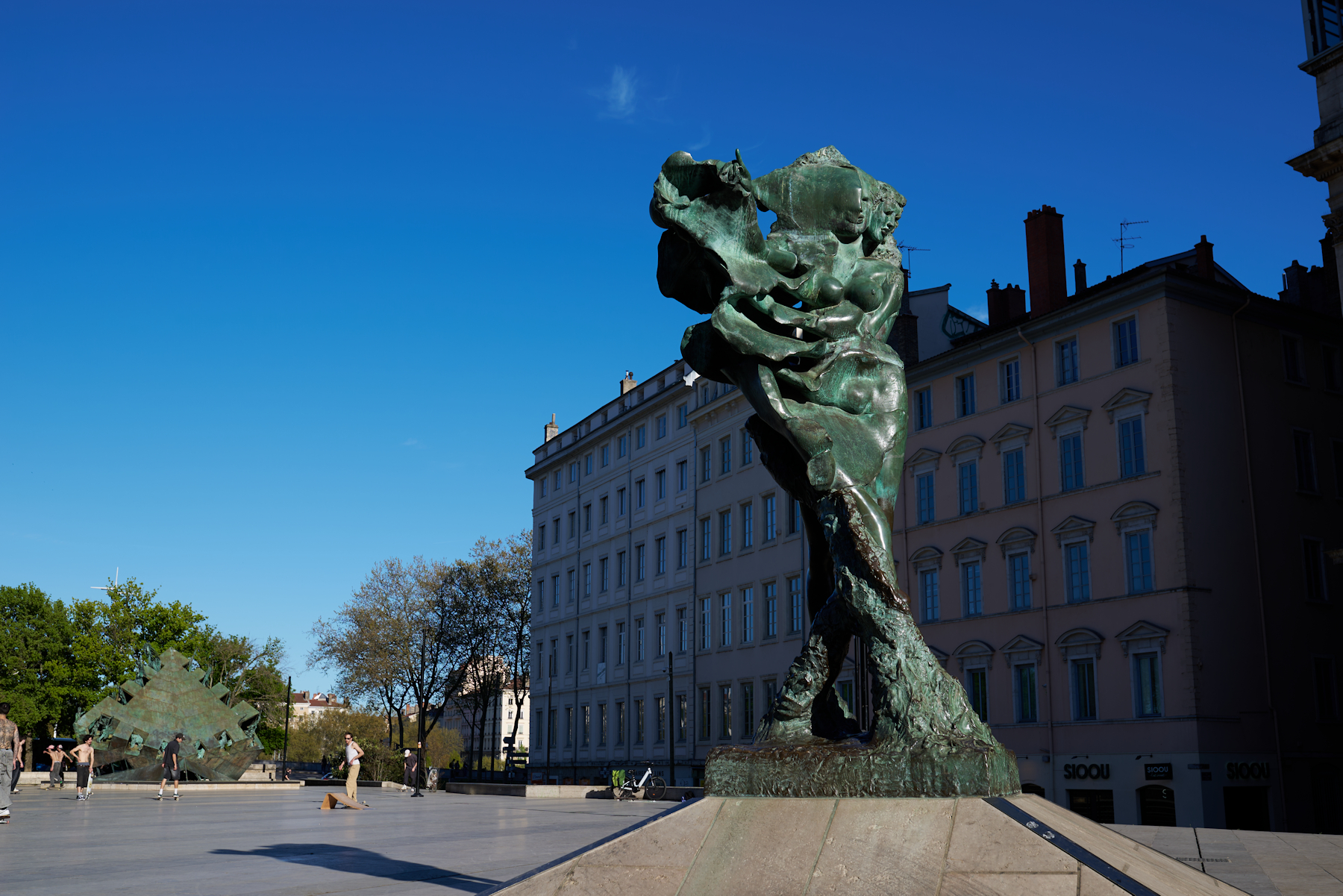
A statue dedicated to Louise Labé in Lyon, France.
I particularly found the argument between Folly and Love to be interesting – both for the timeless aspects of the arguments presented, as well as for the information about love and life in the first half of 16th century life in France. Also, some of the sonnets are really good and explain Labé’s enduring status in the cannon of French poetry.
“Brief, le plus grand plaisir qui soit apres amour, c’est d’en parler” – oui Madame Labé, Je suis d’accord avec vous!
Nine Princes in Amber, by Roger Zelazny
A fantast classic that I haven’t read by an author whose work I really like (Lord of Light and Isle of the Dead are both brilliant), what could go wrong? Nothing!
First published in 1972, this is a fantastic tale with great concepts (something that Zelazny excelled at), a fast pace and no beating about the bush. Great stuff! Next volumes already ordered!
The Dark Labyrinth, by Lawrence Durrell
This is the first novel I have read by Lawrence Durrell, but won’t be the last – I have already ordered ‘The Alexandria Quartet’. which is meant to be fantastic. The Dark Labyrinth tells the story of a group of tourists who visit a dangerous labyrinth on Crete. The stories of the characters leading up the voyage they are on takes up most of the book. The labyrinth and the outcomes for the characters is the highlight of the novel. This is a novel that has remained in my mind for days after finishing.
Valentina, by Guido Crepax
Ein Sammelband der ersten Geschichten über Valentina. Die ersten zwei Geschichten sind eher coole 1960ige Spion-Abenteueren mit geheimnisvollen Kräften und Stil! Danach aber, werden die Geschichten viel abstrakter und tiefgründiger. Wirklich empfehlenswert wenn man sich für europäische BDs interessiert – dieses wichtige Werk soll man kennen!
Storm – Die Chroniken von Rothaar 04: Die schwebende Region, von Van Bavel & Molenaar
Ich fühle mich gerade ein bisschen Krank – glücklicherweise steht meinen Stapel leichte Comic-Unterhaltung bereit! StEine Gechichte aus dem Sturm-Universum die ganz ok ist. Als leichte Unterhaltung zwischendurch… passt das!
Die Geschichte ist ganz ok. Mein Bemerkung zum letzten Band gilt immer noch: Rothaar sollte vernünftig angezogen werden!
Lanfeust von Troy, Band 6: ‘Herscherin Cixi’ und Band 7: ‘Petauren sterben heimlich’, Szenario: Christophe Arleston, Zeichnungen: Didier Tarquin
Weitere Abenteuern mit Lanfeust, Cixi und co. Die Geschichten sind ok (ich finde Arlestons Geschichten generell ‘ok’, aber selten mehr leider) aber die Zeichnungen sind top!
The Bhagavad Gita, translated by Joan Mascaró
One of the main Hindu texts composed sometime ‘BC’, possibly as early as 400BC. It focuses on Krishna explaining why he is the one true god. An interesting text with many nuggets of wisdom, but like all religious texts, you could spend a lifetime analysing it and theorising – something which I do not want to do, so I just let it wash over and through me. It certainly makes me want to find out more about Hinduism
Venus im Pelz, von Leopold von Sacher-Masoch
Vom Nachnamen dieses Autors haben wir das Wort ‘Masochismus’ – und jetzt verstehe ich warum. Der junge Severin lässt sich per Vertrag zum Sklave der reichen, jungen Witwe Wanda machen. Die Geschichte ist schon fesselnd (ha ha ha) und Severin wird ordentlich ausgepeitscht und demütigt. Die Moral der Geschichte? Naja – pass auf, was Sie sich wünschen…
Lanfeust von Troy, Band 8: Das Fabelwesen, Szenario: Christophe Arleston, Zeichnungen: Didier Tarquin
Der Abschlussband dieser Serie. Wie immer, unterhaltsam mit tollen Zeichnungen. Aber mehr nicht. Perfekt für wenn man sich nicht so toll fühlt und leichte Unterhaltung braucht.
Enheduana – The Complete Poems of the World’s First Author, by Sophus Helle
This volume is comprised the poems of Enheduana (The Exaltation of Inana, The Hymn to Inana, The Temple Hymns and some fragmentary hymns) and an introduction and some essays by the translator and cultural historian, Sophus Helle, whose enthusiasm is infectious.
The poems are very beautiful and interesting, especially the Exaltation of Inana. Enheduana’s doubt and frustration speak to us across the ages in lines like “My honey-mouth is full of froth, my soothing words are turned to dust.” She is not only the first ever named author, but an author who communicates directly to us about how she is feeling. Reading her work, you feel the connection. This is astonishing when you think that she was writing around 4300 years ago. We are closer in time to Julius Caesar and Cleopatra VII than they were to Enheduana.
I can’t judge the accuracy of Sophus Helle’s translations, but the detailed footnotes and discussions of difficult passages suggest that a great deal of thought has been put into them. The results in English are poetic and beautiful.
The essays are very interesting and add a lot to the understanding of Enheduana’s time and circumstances. They do drift a little too far into post modern musings for my taste – but are still extremely interesting.
A great read. More people should know about Enheduana.
The Hitchhiker’s Guide to the Galaxy, by Douglas Adams
REREAD. What can I say – so much fun. A modern classic that makes me laugh out loud. I really need a ‘Beware of the Leopard’ sign!
Caroline Baldwin, Band 17 Narco Tango, von André Taymans
Die siebzehnte Caroline Baldwin Geschichte, die wie immer Spaß macht. Ich mag André Taymans’s ligne claire Stil sehr.
Look to the Lady, by Margery Allingham
The third of Allingham’s novels featuring Albert Campion. Great fun. Very silly without being comedy. The characters are just so entertaining – especially Campion himself and Lugg. I also like that a lot of the stories are set in Essex or the characters travel through Essex – feels a bit like home.
The Hobbit, by J.R.R. Tolkien
REREAD. Read out loud to my 6-year-old son. With all the voices and sound effects! A classic that never fails to delight!
The Turn of the Screw, by Henry James
I am not sure what to make of this novel. I did not really enjoy reading it. The prose is intentionally convoluted and unwieldy (it is as if Mr James took a draught of concentrated German academic writing and applied it to the narrator’s account). However… the story has been ‘haunting’ me for days since. Were the ghosts real or was the governess mad? Or maybe a bit of both? And the creepy, almost sexual language used in places, as if the governess is projecting her unfulfilled desires onto the children. Vaguely disturbing and leaves you with a feeling of not knowing what the truth of the matter is. If I had to rate this novel, my rating would be as inconclusive as the story itself.
The edition I read was The Folio Society edition… and oh my goodness, what a beautiful volume. Even the slip case is gorgeous!
Caroline Baldwin Band 18 Half-Blood und Band 19 Falken, von André Taymans
Eine gute Geschichte geteilt über zwei Bände. Das Ende ist aber ziemlich traurig… Zeichnungen wie immer top.
Le Chien jaune, par Georges Simenon
C’était le premier roman policier en français que j’ai lu. Je l’ai beaucoup apprécié : Maigret est un personnage vraiment intéressant.
Second quarter review: Quite a mixture this quarter! Two works of poetry (with accompanying non-fiction essays). Three crime novels – of which one was in French. Two fantasy novels. Two classics – of which one was in German. A sci-fi novel. A work of ‘literature’. A work of Hindu theology (would also count as a classic). Two books of poetry. And finally, nine comics, of which one was in French, the rest in German. Plans for the next quarter? I am thoroughly enjoying the Albert Campion crime novels by Margery Allingham, so I will continue with those. I should probably also return to the ancient Greeks – maybe some more of Aeschylus’s plays? I’d also like to tackle another French novel – I have several on a pile looking at me… but it requires a lot more concentration (as looking stuff up) than reading in English or German.